Wildflower/Wildfire Atlas , 2025-2026
This series emerged from multi-season field research at the Monument Creek Wildfire site (cut block R14738E) in Sn̓ʕay̓ckstx/Sinixt territory, BC. A landscape heavily shaped by industrial logging and climate‑driven fire, the site also revealed slow yet steady regeneration as new growth emerged from scorched soil. These paintings underscore the resilience of the site’s ecological communities through continuity and renewal.
Created primarily from a palette of mineral and plant pigments sourced at the vast wildfire site over several seasons, these works are the result of intensive fieldwork, botanical and ethnobotanical learning, and chemical experimentation. Titles incorporate English and Latin plant names to acknowledge traditions of botanical classification. This global naming convention is entangled with histories of British imperialism that shape the landscape’s current condition. Yet the convention has rendered invisible the local: a web of ethnobotanical relationships that go further back and further forward than any exploitative land management could. Thus, each plant’s n̓səl̓xčin̓ (Southern Interior Salish language spoken by the Sinixt) names and associated meanings are also included. These names and their meanings contain knowledge about a specific place and its people, and a lineage of practical, respectful, and essential human-botanical relationships. The fact that these names and translations exist now is a testament to cultural resilience and intensive community language revitalization efforts.
I learned and was given permission to share these names from Christopher Parkin, Principal of the Salish School of Spokane, WA, assisted by Eileen Delehanty Pearkes, author of Geography of Memory: Reclaiming the Cultural, Natural and Spiritual History of the Snayackstx (Sinixt) First People(2022), and reviewed by Sinixt elder Shelly Boyd. I am thankful for the openness and support I received when I reached out with an interest in learning about these plants. A depth of knowledge and connection to the land is imbedded in the language, a depth that I’ve barely scratched the surface of while working on this project. I’m grateful for the opportunity to learn.
The research for Wildflower/Wildfire Atlas has been generously supported by the Canada Council for the Arts.
Images photographed by Kenton Doupe unless stated.
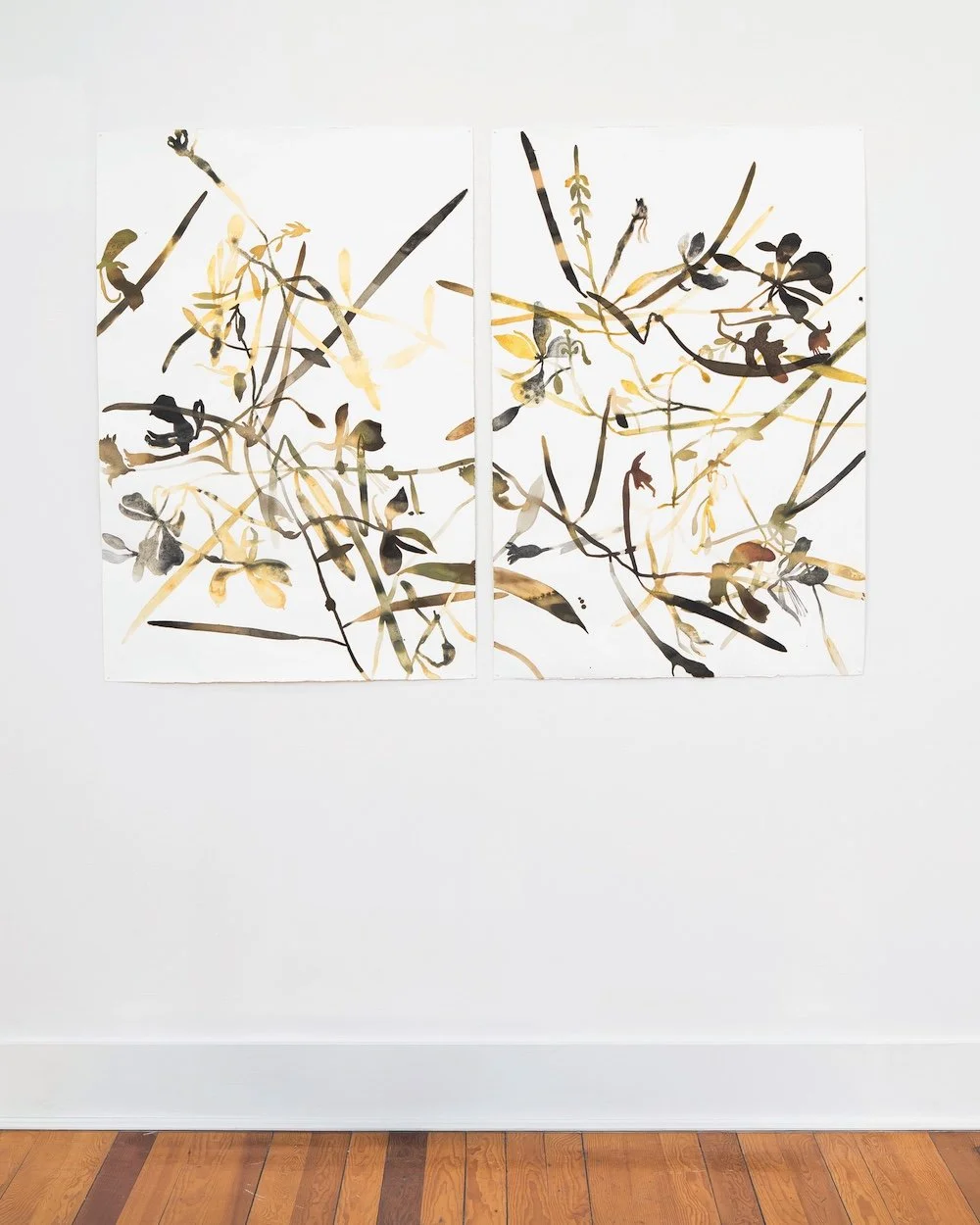
Installation view, Loot (8 March - 6 May 2026), Langham Cultural Centre, Kaslo, BC. Fireweed, ɬəɬqmiɬp / ɬəɬqiɬəml̓x, (Epilobium angustofilium). Ink and paint made from magenta, fireweed, charcoal, carbonized soil, ochre rich soil, and saddened goldenrod on rag paper. Materials collected at Monument Creek Wildfire (clearcut R14738) on sn̓ʕay̓ckstx/Sinixt Territory. Diptych 60” x 44” 2025
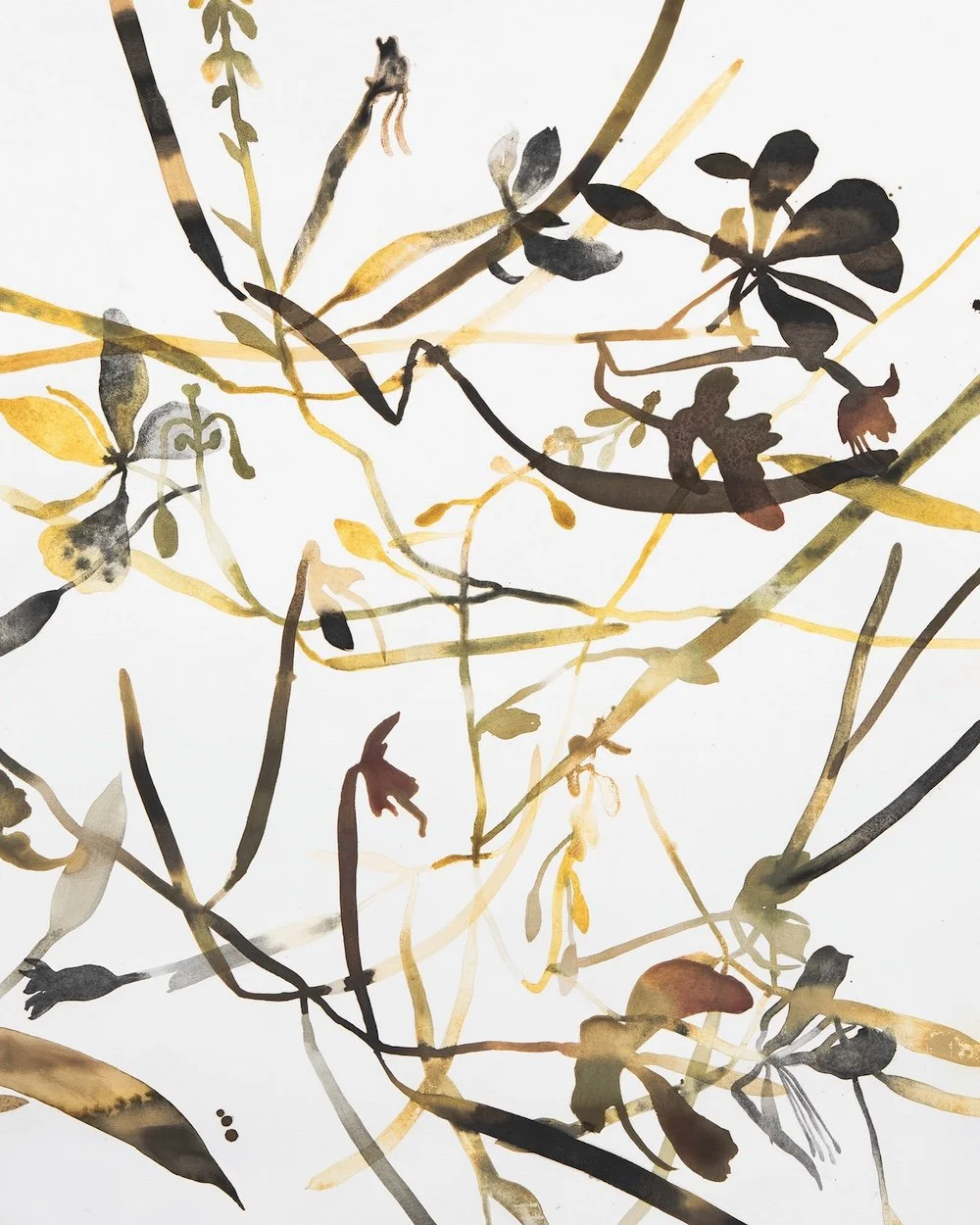
Detail, Fireweed, ɬəɬqmiɬp / ɬəɬqiɬəml̓x, (Epilobium angustofilium)
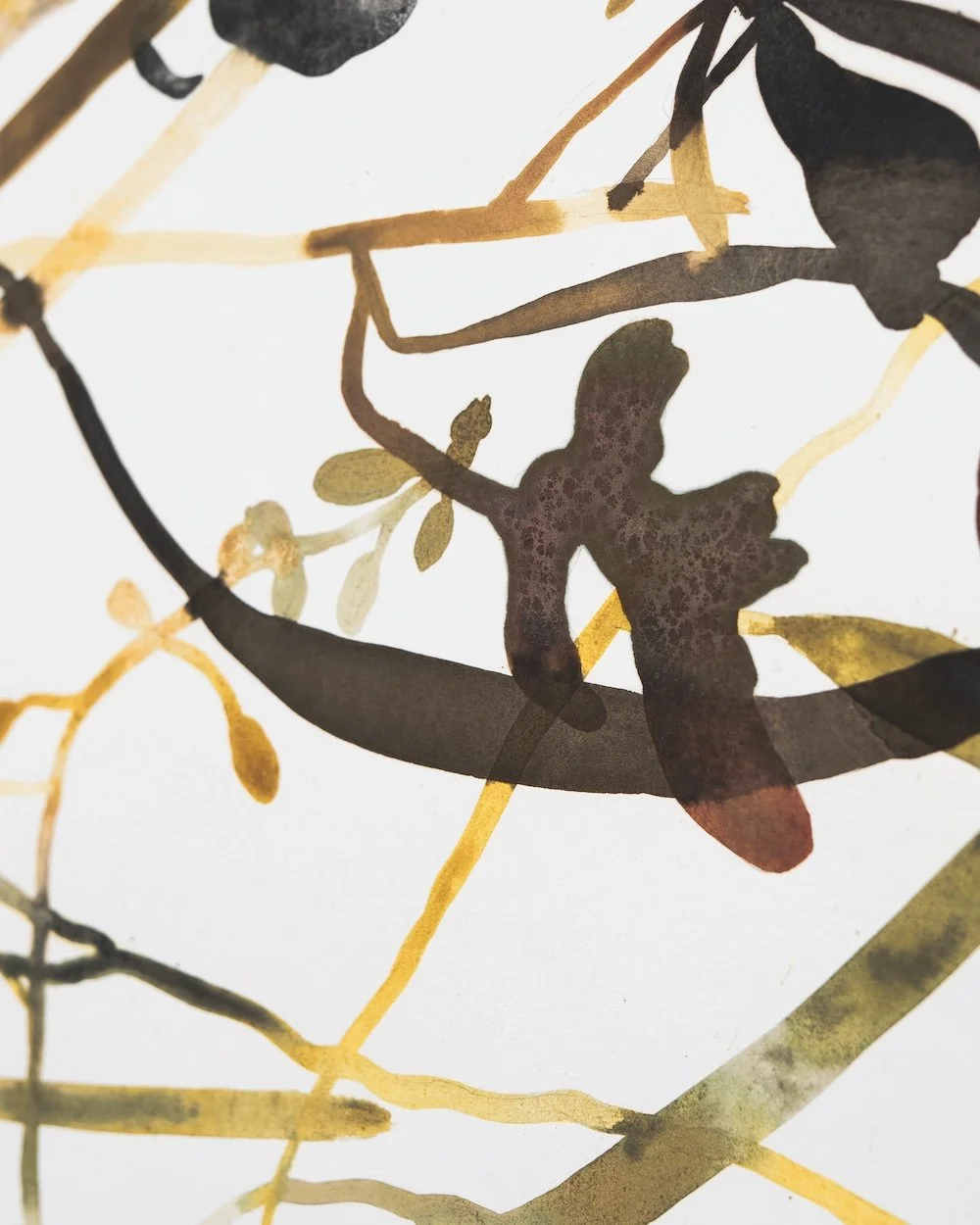
Detail, Fireweed, ɬəɬqmiɬp / ɬəɬqiɬəml̓x, (Epilobium angustofilium)

Installation view, Under the Orange Sticks of the Sun (25 April- 5 July, 2026), Midlands Arts Centre, Birmingham UK. Photo: Tegan Kimbley
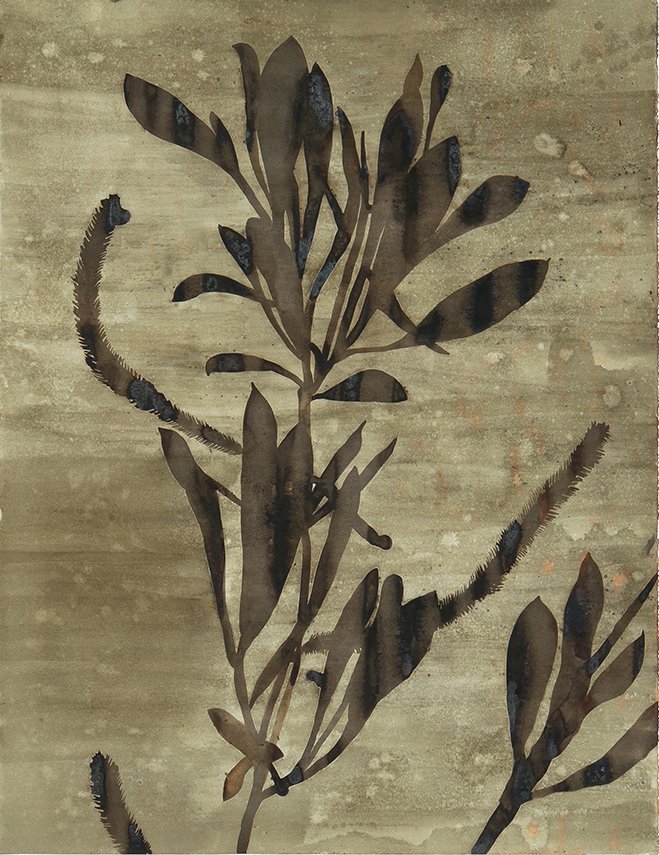
Scouler’s Willow, pax̌ʷpəx̌ʷɬp, “spread out plant”, (Salix scouleriana). Ink made from Scouler's willow and saddened goldenrod ink on paper. Materials collected at Monument Creek Wildfire (clearcut R14738) on Sn̓ʕay̓ckstx/Sinixt Territory. 50" x 38", 2026
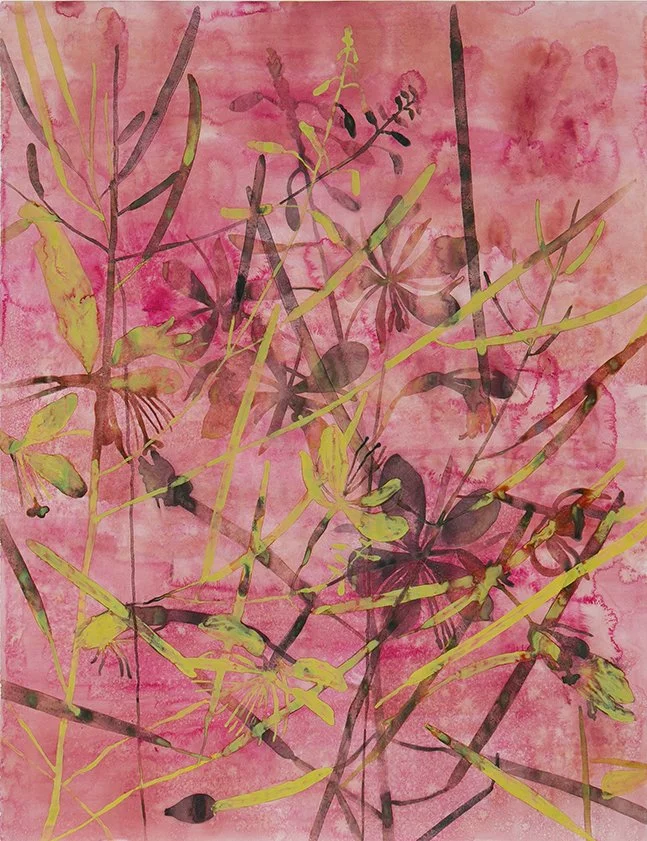
Fireweed, ɬəɬqmiɬp / ɬəɬqiɬəml̓x, (Epilobium angustofilium). Ink and paint made from magenta, fireweed, charcoal, carbonized soil, ochre rich soil, and saddened goldenrod on paper. Materials collected at Monument Creek Wildfire (clearcut R14738) on Sn̓ʕay̓ckstx/Sinixt Territory. 50" x 38", 2025

Fireweed, ɬəɬqmiɬp / ɬəɬqiɬəml̓x, (Epilobium angustofilium). Detail.
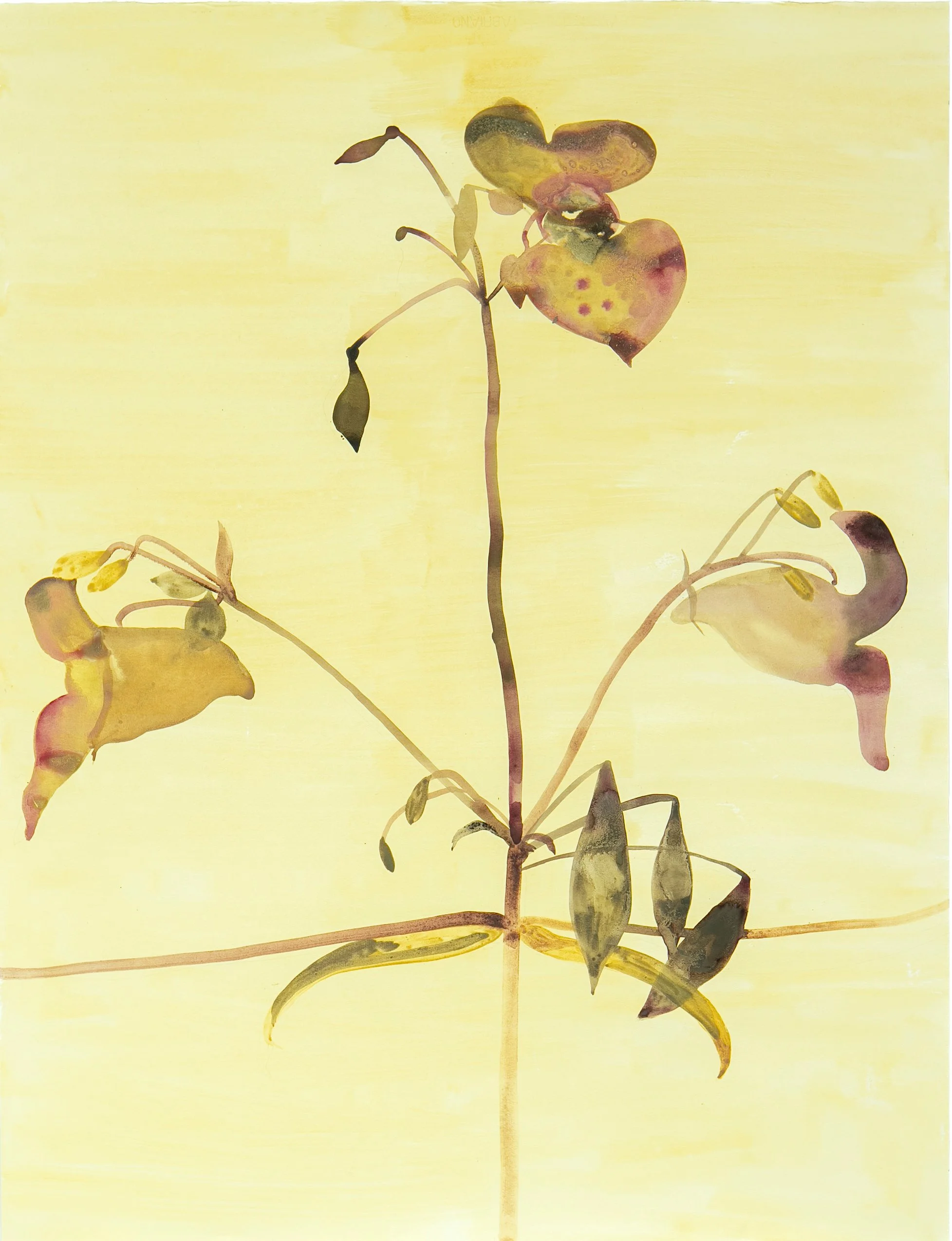
Himalayan Balsam/Ornamental Jewelweed/Kiss-me-on-the-mountain, (Impatiens glandulifera). Invasive Alien Species of Union concern list (since 2017). Ink and paint made from tansy, fireweed, Sitka alder, saddened Sitka alder, charcoal, carbonized soil, magenta, and ochre rich soil on paper. Materials collected at Monument Creek Wildfire (clearcut R14738) on Sn̓ʕay̓ckstx/Sinixt Territory. 50" x 38", 2026
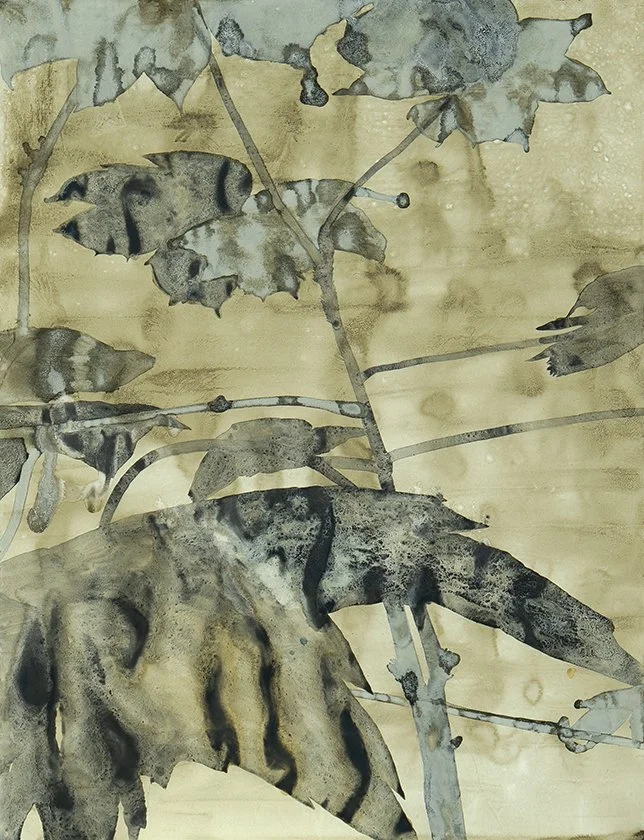
Devil’s Club, x̌aʔx̌aʔx̌íɬp, “sacred plant”, (Oplopanax horridum). Ink made from Oregon grape, Scouler's willow, charcoal, and saddened blue elderberry on paper. Materials collected at Monument Creek Wildfire (clearcut R14738) on Sn̓ʕay̓ckstx/Sinixt Territory. 50" x 38", 2025
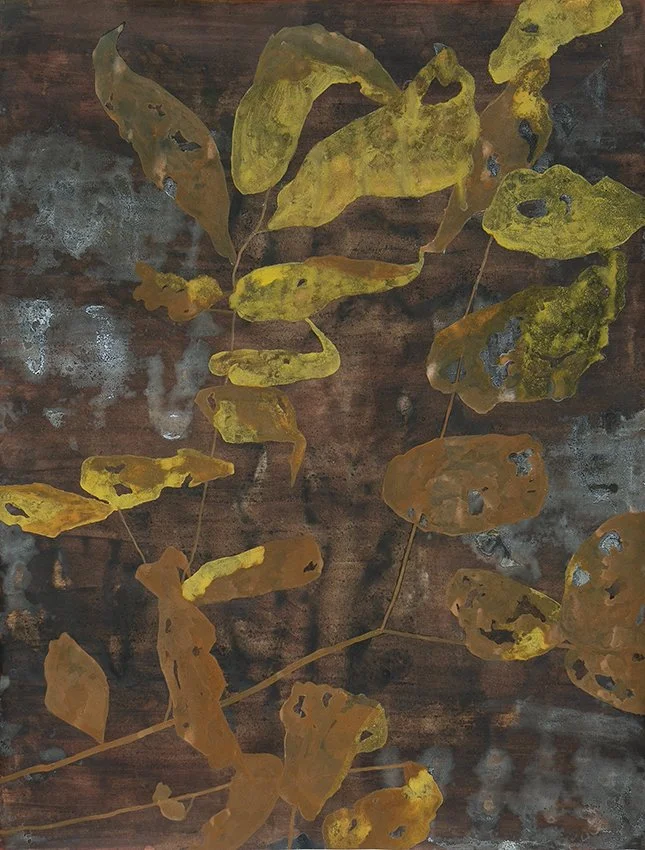
Hooker’s Fairybells, lw̓w̓liwl̓, “little bells”, (Prosartes hookeri). Ink and paint made from goldenrod, charcoal, Sitka alder, carbonized soil, fireweed, alizarin, blue elderberry, and ochre rich soil on paper. Materials collected at Monument Creek Wildfire (clearcut R14738) on Sn̓ʕay̓ckstx/Sinixt Territory. 50" x 38", 2025
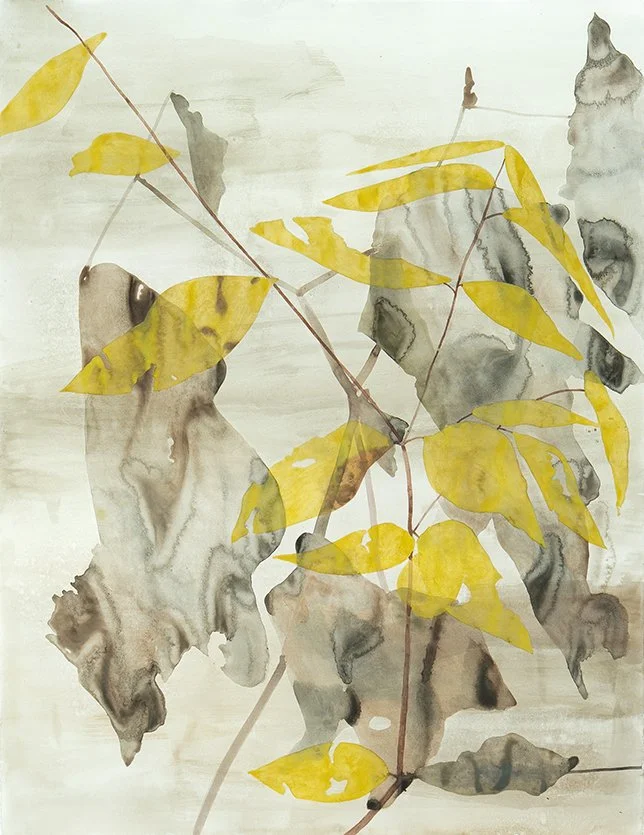
Spreading Dogbane, sp̓ip̓c̓n̓, “little sp̓ic̓n̓”, (Apocynum androsaemifolium). Ink and paint made with fireweed, goldenrod, blue elderberry, and carbonized earth pigments on paper. Materials collected at Monument Creek Wildfire (clearcut R14738) on Sn̓ʕay̓ckstx/Sinixt Territory. 50" x 38", 2025
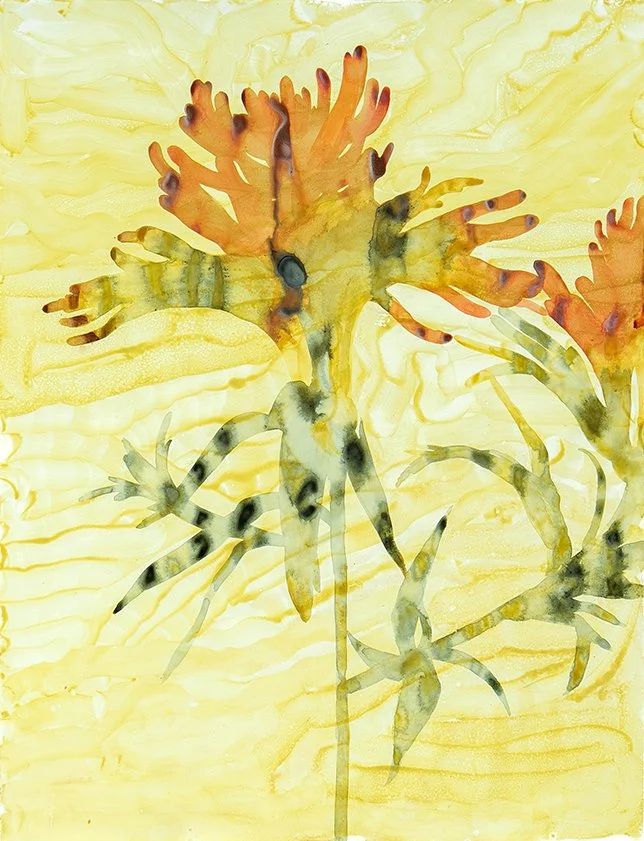
Red Paintbrush, kʷl̓kʷl̓aˤqn̓, “red on top”. Same word as pileated woodpecker. (Castilleja miniata). Ink and paint made from blue elderberry, fireweed, Sitka alder, alizarin, and ochre rich soil on paper. Materials collected at Monument Creek Wildfire (clearcut R14738) on Sn̓ʕay̓ckstx/Sinixt Territory. 50" x 38", 2025
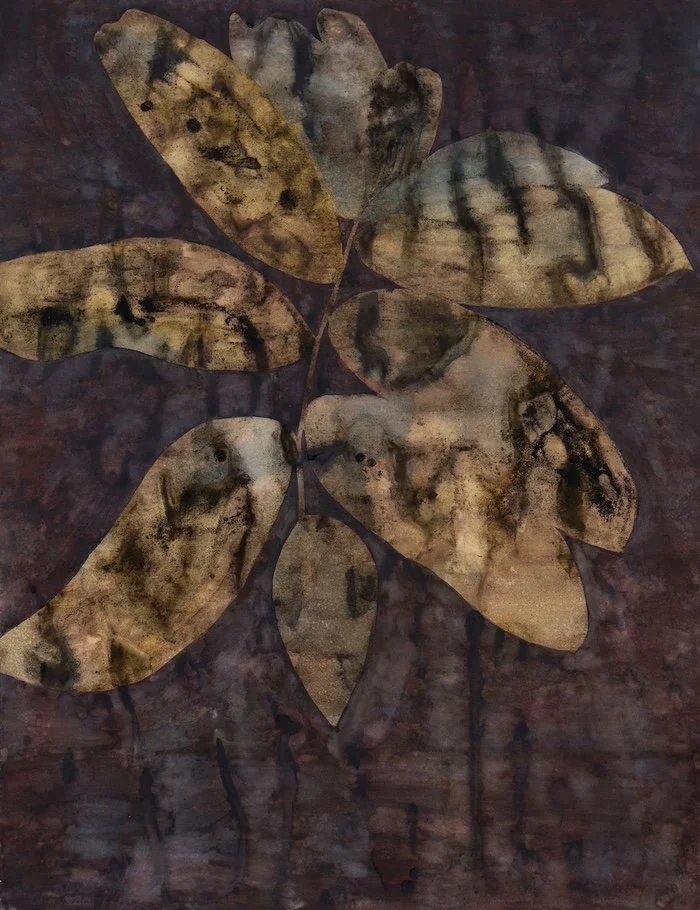
False Solomon’s Seal, q̓ixán̓, “marked base/root/foot”, (Smilacina racemosa). Ink and paint made from alizarin, magenta, blue elderberry, goldenrod, willow, Sitka alder and tansy on paper. Materials collected at Monument Creek Wildfire (clearcut R14738) on Sn̓ʕay̓ckstx/Sinixt Territory. 50" x 38", 2026
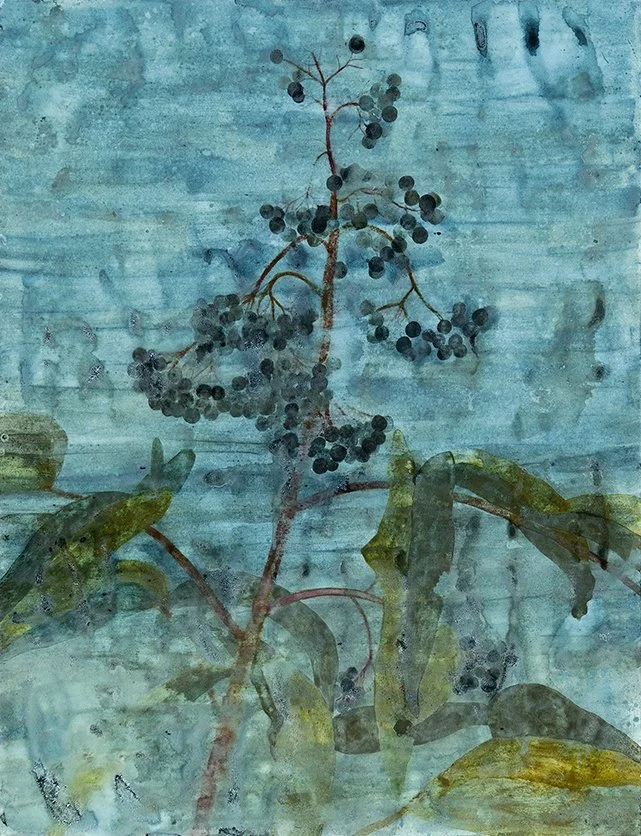
Blue Elderberry bush, c̓kʷəkʷiɬp, “little sour fruit bush”, (Sambucus caerulea). Ink and paint made with blue elderberry, saddened blue elderberry, alizarin, Sitka alder, goldenrod, and scouler’s willow on paper. Materials collected at Monument Creek Wildfire (clearcut R14738) on Sn̓ʕay̓ckstx/Sinixt Territory. 50"x38", 2025
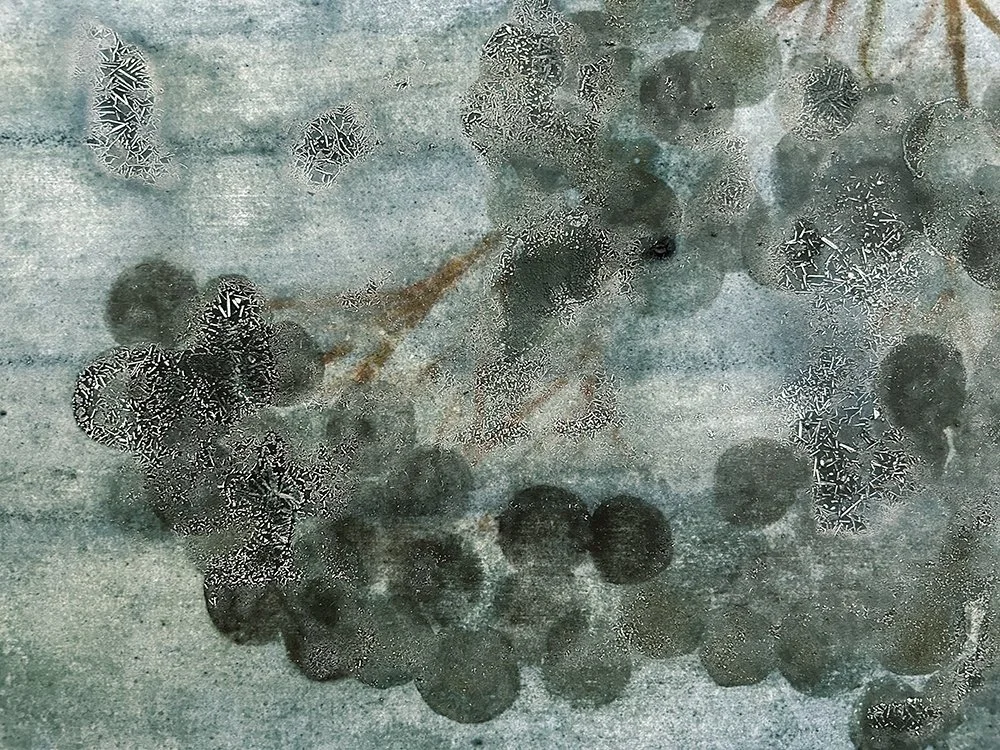
Blue Elderberry bush, c̓kʷəkʷiɬp, “little sour fruit bush”, (Sambucus caerulea). Detail
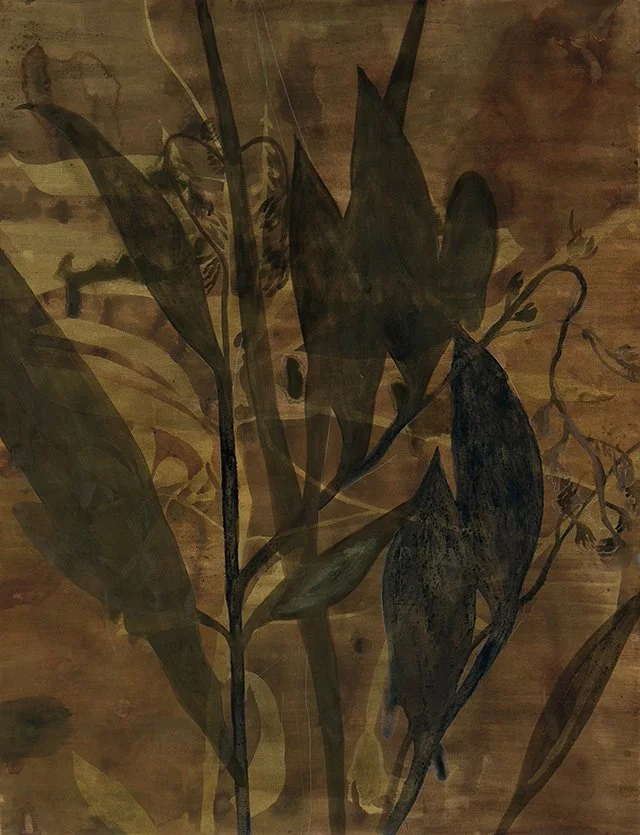
Common Comfrey, (Symphytum officinale). Ink and paint made from charcoal, saddened goldenrod, alizarin, Scouler’s willow, and goldenrod on paper. Materials collected at Monument Creek Wildfire (clearcut R14738) on Sn̓ʕay̓ckstx/Sinixt Territory. 50" x 38", 2026
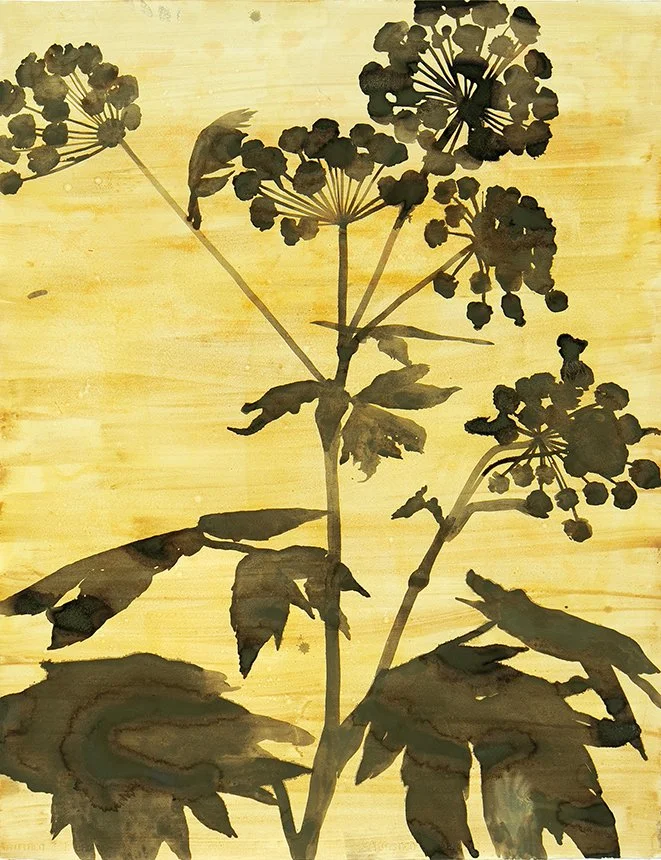
Cow Parsnip/Hercules’s Healer, ynixʷ, (Heracleum lanatum). Ink made with fireweed and saddened goldenrod on paper. Materials collected at Monument Creek Wildfire (clearcut R14738) on Sn̓ʕay̓ckstx/ Sinixt Territory. 50" x 38", 2026